

You told yourself you’d just have one biscuit with that cup of tea, and now the packet’s empty. A few minutes later, you’re standing at the fridge eating cheese from the block.
Shortly afterwards, there’s always the same routine: the guilt or the promise to yourself that the next day will be different.
This happens to just about everyone from time to time, and on its own, it’s usually not a sign of anything serious. But if it becomes a pattern, it can be a sign of binge-eating disorder.
‘The first thing to remember about binge eating is that it’s not about weakness, greed or being broken,’ says Dr Jason Winnett, Melbourne Bariatric and Laparoscopic Surgeon.
‘Binge eating is one of the most common things we see in patients before weight-loss surgery. It’s driven by brain chemistry, restriction and emotion, not a lack of willpower.’
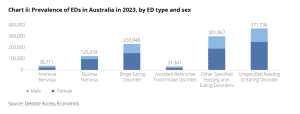
According to Deloitte, an estimated 233,948 Australians live with binge eating.
What is binge eating disorder?
Binge eating disorder is not a lifestyle choice; it’s a real mental health challenge that calls for understanding and support.
However, the line between binge-eating disorder and simply overeating can feel blurred.
‘Many patients worry that eating more than usual when they’re stressed means they have binge-eating disorder,’ says Dr Winnett.
‘However, binge-eating disorder is a chronic, recurring pattern, marked by episodes of very rapid eating, to the point of significant physical discomfort, and eating when there is no physical hunger at all.’
Physical hunger:
- tends to build slowly
- can be delayed
- is satisfied by many different foods
- usually stops once you feel comfortably full
However, emotional hunger:
- often comes on suddenly
- focuses on specific sugary or high-carb foods
- can lead to eating again soon after
- is more likely to feel out of control or followed by guilt
Signs of binge-eating disorder
Binge-eating disorder often shows up in everyday life in ways that are easy to overlook at first. Here are some warning signs often used to diagnose binge-eating disorder:
- Binge eating happens at least once a week for three months or more
- Repeated excessive eating within a two-hour period
- Feelings of loss of control while eating (excessively large portions, inability to stop)
- Eating while full
- Distress, embarrassment or self-disgust
There are also signs that may exclude other eating disorders and conditions:
- Absence of inappropriate compensatory mechanisms to prevent weight gain (such as laxative use, self-induced vomiting, over-exercising)
- Symptoms not better accounted for by other medical conditions, mental health conditions or substance use
- Exclusion of bulimia or anorexia nervosa diagnosis
Resources: AJGP(Australian Journal of General Practice)
General information only. Not medical advice. All procedures carry risks and results are individual. Consult your GP and a specialist surgeon, or seek a second opinion, before proceeding.
Binge-eating disorder: obesity & comorbidities
Binge-eating disorder (BED) and obesity are closely intertwined.
A study published in Trends in Molecular Medicine involving 12,337 adult participants shows that, among people with obesity, binge-eating disorder (BED) is the most common eating disorder diagnosis, with lifetime prevalence around 5.49% in women with obesity and 5.63% in men with obesity.
Figures from previous studies claim that between 36.2% and 87.8% of people with BED have experienced obesity at some point in their lives.
‘Binge-eating disorder and obesity tend to go together far more often than people realise,’ says Dr Winnett. ’Genetics, psychology and life experiences are potential underlying drivers.’
The journal highlights several overlapping risk factors shared by BED and obesity:
- Genetics: Certain gene variants (such as FTO and MC4R) that influence hunger and appetite have been linked to both BED and obesity, suggesting that the two conditions share a biological basis.
- Family history: If obesity or binge eating runs in your family, your own risk of developing either condition may be higher.
- Personality and emotional health: Struggling with impulsivity, low self-esteem, or difficulty managing emotions can make both binge eating and weight gain more likely.
- Life experiences: Difficult childhood experiences, being bullied about weight, or a long history of dieting can all increase the risk of developing BED and obesity together.
Binge-eating disorder and diabetes
When BED and obesity coexist, the clinical picture becomes significantly more complex, with conditions such as type 2 diabetes becoming far more likely.
An Eating Behaviours study of 488 patients seeking bariatric surgery found that 8.2% of participants had both type 2 diabetes and binge eating disorder at the same time, highlighting the added risk burden in this group.
‘Beyond diabetes, BED is also linked with a range of other obesity‑related conditions, including high blood pressure, asthma, gastrointestinal problems and sleep disorders,’ says Dr Winnett.
‘For women, we commonly see menstrual irregularities, pregnancy complications and idiopathic intracranial hypertension — all of which can complicate both weight management and mental health care.’
How binge-eating disorder is treated
Because binge-eating disorder is closely linked to psychological and emotional factors, current guidelines and research generally recommend psychotherapy as a first-line component of the treatment plan.
In one study of 162 adults with binge-eating disorder, published in European Eating Disorders Review, both cognitive behavioural therapy (CBT) and interpersonal psychotherapy (IPT) led to significant reductions in overall eating-disorder symptoms, supporting them as effective treatment options.
Cognitive Behavioural Therapy (CBT)
According to the American Psychological Association (APA), CBT is a structured, goal-oriented form of talk therapy that provides support to work with a trained mental health professional.
In sessions, your therapist helps you clarify the problems you want to address, explores your thoughts, emotions and past experiences, and identifies patterns of thinking and behaviour that may be contributing to your difficulties.
Together, you then practice more helpful ways of interpreting situations and responding, so that over time you can apply these skills to future challenges, including managing stress and urges to binge.
Interpersonal Therapy (IPT)
Interpersonal psychotherapy (IPT) is a structured, time-limited form of talk therapy that focuses on improving your relationships and communication with others.
It’s usually offered over about 12–16 weeks, with a clear treatment focus, regular reviews of progress, therapist-led interviews and homework between sessions.
IPT is built on three core ideas:
- Interpersonal problems and mood are closely connected.
- Improving key relationships and how you handle conflicts or life changes can lift mood and reduce symptoms.
- As mood improves, your ability to build and maintain supportive relationships also tends to improve further.
Mindful eating
Mindful eating means paying calm, non-judgmental attention to eating in the present moment, tuning into hunger and fullness, the sensory experience of food, and emotional or situational triggers, rather than following strict diet rules.
A recent trial in Nutrients found that an 8-week mindful eating program for adults with obesity and binge-eating disorder was associated with significant reductions in both frequency and severity of binges.
Here are some practical mindful eating tips:
- Eat in a calm setting without phones, TV or other distractions.
- Slow down: take small bites, chew thoroughly, and notice the taste, texture and smell of your food.
- Use a simple 1–10 hunger/fullness scale to check in before and after eating.
- Pause between bites to see whether your body feels ‘full’ rather than eating on autopilot.
- Try to distinguish physical hunger from emotional hunger, and let that guide whether and how you eat.
Bariatric surgery and binge-eating disorder
‘Although psychological interventions are very helpful, bariatric surgery can also dampen the drivers that cause binge eating by influencing the prefrontal cortex,’ says Dr Winnett.
The prefrontal cortex sits just behind your forehead and is part of the frontal lobe. It’s a key brain region for successfully regulating and controlling eating behaviour.
An article published in Neuroscience & Biobehavioral Reviews suggests that impaired prefrontal control in people with binge-eating disorder is closely linked to loss of control over eating and episodes of overeating. Emerging neuroimaging research suggests that bariatric surgery can beneficially alter brain connectivity involving the prefrontal cortex and related networks.
These changes in connectivity may reflect stronger ‘top-down’ control over food cravings after surgery, helping patients to better manage urges and reduce episodes of binge eating.
Worried about binge eating? Help is available
If any of this feels familiar, you’re not alone, and you don’t have to figure it out by yourself.
Binge-eating disorder responds well to the right support, whether that’s talking to your GP about a referral, working with a psychologist, or chatting to our multidisciplinary team of dietitians and psychologists at Winnett Specialist Group.
Ask us a question or book a consultation to find out what support might be right for you.

Contact
P (03) 9417 1555
admin@winnettspecialistgroup.com.au
www.winnettspecialistgroup.com.au
Queens Terrace, 382 Victoria Parade, East Melbourne 3002
References:
4-Effects of Mindful Eating in Patients with Obesity and Binge Eating Disorder-Nutrients
This page was reviewed by Dr Jason Winnett and dietitian Ashleigh Gale, July 2026, AHPRA No: MED0001155541
General information only. Not medical advice. All procedures carry risks and results are individual. Consult your GP and a specialist surgeon, or seek a second opinion, before proceeding.